000-000-0000 · office answered from 10am, closed Sundays
Practical
What to wear and bring
There is no school uniform, no compulsory colour and nothing to buy from us. For most classes the only thing you cannot improvise is the shoes.
No school leotard
Nothing sold on the premises
Instruments lent for a first term
Ballet
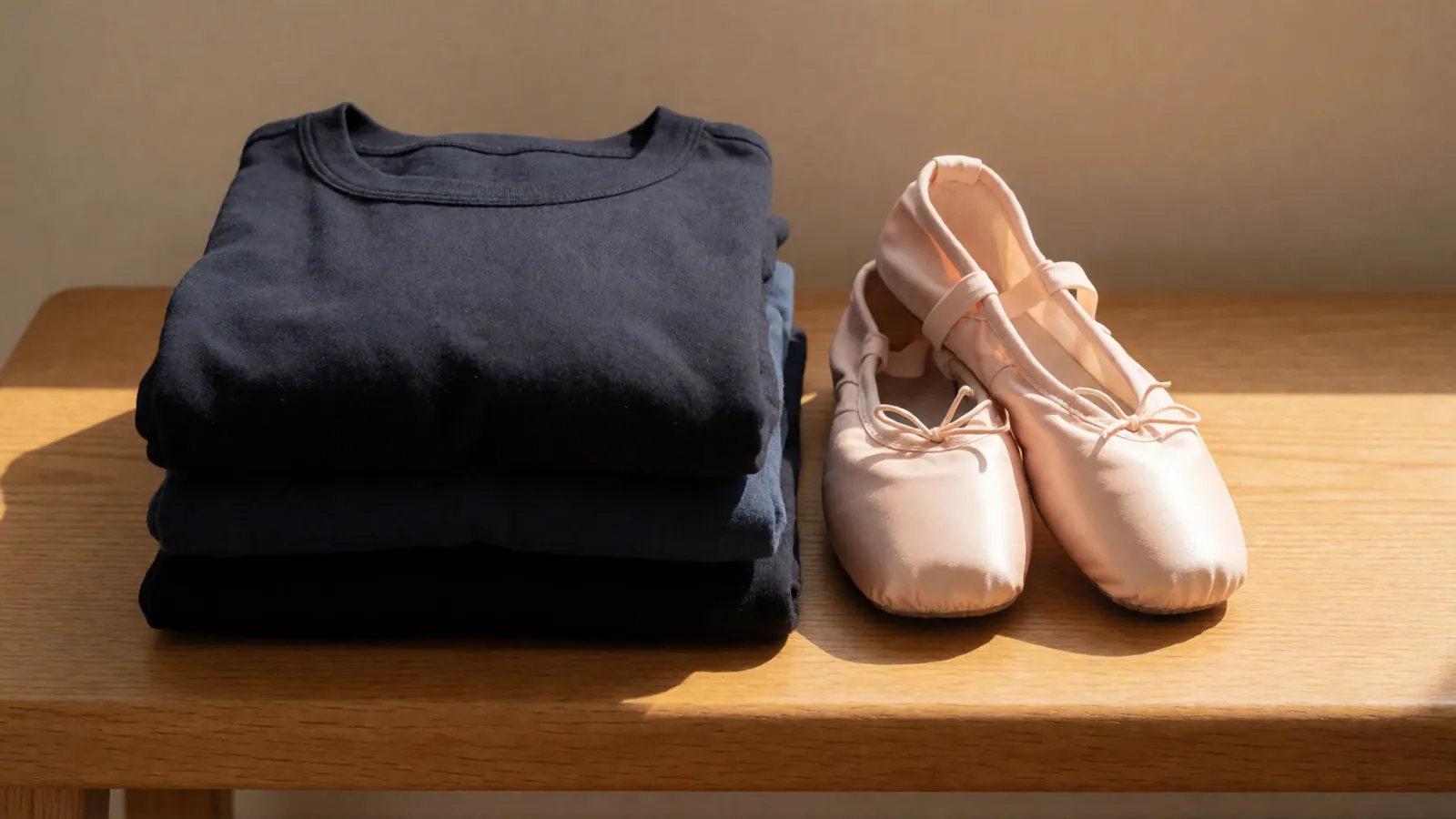
Soft leather or canvas ballet shoes, full sole for First Steps and split sole from Ballet 1
A leotard, and footless or convertible tights; a wrap skirt if she wants one
Hair off the face and off the neck — a bun above Ballet 1, a firm ponytail below it
No jewellery beyond small studs, and nothing on the wrists
There is no school leotard and no compulsory colour. Any plain leotard is fine and we would rather you spent the money on the second term.
Jazz
Bare feet or jazz shoes; both are fine and bare feet are cheaper
Leggings or shorts and a fitted top, so the teacher can see the line
Hair tied back
Adult jazz has no dress code at all beyond being able to move and being able to see your own alignment in the mirror.
Tap
Tap shoes, and they are the one thing you cannot substitute
Leggings, joggers or shorts — anything you can move in
Hair tied back
Buy tap shoes half a size large for a growing child and put an insole in. A pair lasts about two years that way instead of one term.
Hip hop
Clean indoor-only trainers with a flat sole; street shoes are not allowed on the floors
Comfortable clothes you can move in
A water bottle
Indoor-only means a pair that lives in the bag and never goes outside. It is about the floor rather than about the shoes.
Contemporary
Bare feet, or foot thongs if the student prefers them
Fitted clothing that covers the knees for floor work, and something warm for the beginning of class
Hair tied back and off the floor
Knee coverage is not modesty, it is friction. A bare knee on a marley floor in the first month of floor work is a burn.
Music lessons and ensembles
The instrument, if it is one that travels; the school keeps loan guitars and violins for the first term
A notebook, which the teacher writes the week's practice into
Any music you have been given, in a folder rather than loose
Nails short for guitar, violin and piano
You do not need to buy an instrument before the first lesson and you should not. Talk to the teacher first — the wrong size is worse than none.
Everything else, for every class
A named water bottle. Everything in this building that is not named ends up in one box in the corridor.
A bag that fits on a hook, because the changing space is small and floor bags become a trip hazard in a room of children.
A cardigan or a hoodie for after class. Dancers cool down fast and the corridor is cold in January.
For music, the practice notebook. It is the only record of what was agreed in the lesson.
What not to buy yet
Nothing, for a trial class. Something to move in and bare feet covers every class except
tap, and for tap we will lend shoes for a first visit.
For a first term: shoes if the discipline needs them, and nothing else. Do not buy a
leotard in the school colours, because there are none. Do not buy an instrument, because the
school lends guitars and violins for a first term and because the wrong size is worse than
none at all.
Where to buy shoes
Anywhere. There is no shop here, we take no commission from anybody, and we will happily
tell you what a pair should cost so you know when you are being over-sold. Two things worth
knowing: buy tap shoes half a size large for a growing child and put an insole in, which
makes a pair last two years rather than one term; and a ballet shoe should be tried on and
not ordered by shoe size, because the sizing in this trade bears no relation to street
sizing.
Hair, and why we go on about it
Hair off the face and off the neck for every dance class. It is not a matter of neatness: a
teacher correcting a neck line or a head position cannot see either through hair, and a
student turning cannot spot with hair across their eyes. A firm ponytail is fine below the
upper ballet levels; above them, a bun.
Before you come
What the first class is actually like
Where parents wait, what happens if a child will not go in, and why the first three weeks are often the difficult ones. Written for the corridor.